If you're working on your own list of the world's natural wonders, this blog is for you. We will make you tour the world just in front of your monitor before you decide to spend any penny.
Why Visit The Mountain Gorilla-Rwanda
Get link
Facebook
X
Pinterest
Email
Other Apps
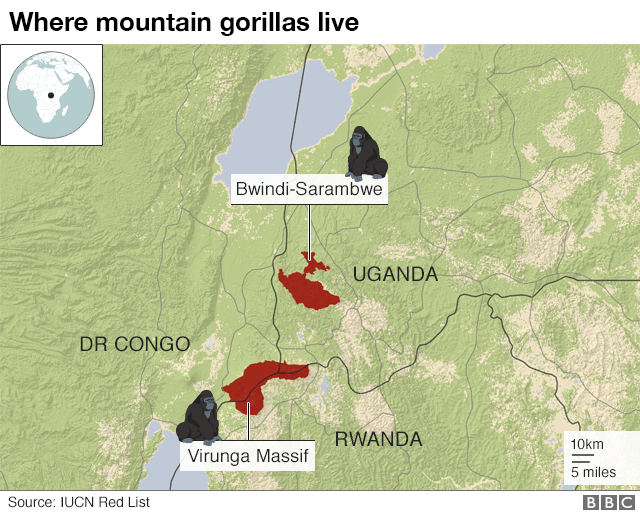
Gorillas make their homes in and amongst the bamboo-covered slopes of the Virunga Mountains in the Volcanoes National Park in northern Rwanda. Trek to see them and you’ll be introduced by your expert trackers and guides to one of the fully-habituated families of mountain gorillas and you can stay with them for an awe-inspiring hour, often crouching just a few feet away, whilst the gorillas go about their daily lives.
Hikes in the mountains can last anywhere from 30 minutes to 4 hours + depending on the family allocated to your group and their location. The journey back can take just as long, but you are often carried along by the euphoria you feel at seeing the gorillas!
There were around 600 mountain gorillas left in the wild in 2008; but numbers have now risen to over 1,000 after intensive conservation efforts. These include anti-poaching patrols and vets trained to give care to gorillas in the wild. The gorilla is restricted to protected areas in the Democratic Republic of the Congo, Rwanda and Uganda. Threats remain, including poaching, civil unrest and diseases passed on by humans. But while mountain gorillas are increasing in number, the great ape remains endangered. Dr Liz Williamson of the IUCN primate specialist group said conservation action must continue. "Coordinated efforts through a regional action plan and fully implementing IUCN Best Practice guidelines for great ape tourism and disease prevention, which recommend limiting numbers of tourists and preventing any close contact with humans, are critical to ensuring a future for the mountain gorilla," she said.
Tucked in between the iconic safari destinations of Kenya and Tanzania, Rwanda offers guests some of the best primate tracking on the planet – set against the backdrop of its endless green hills and soaring mountainsides.
With over half of the world’s remaining mountain gorilla population, it’s no surprise that the majority of guests visit Rwanda to track and view our highly endangered cousins. Rwanda is superb for primates in general, including the fun-loving Sykes monkey, the Golden monkey and the boisterous chimpanzee in the Nyungwe Forest. Despite a turbulent past, Rwanda is a safe and friendly destination – testament to the resilience of its people. For guests seeking a deeply enriching safari, Rwanda offers an experience that is difficult to find anywhere else.
Why Visit?
Nothing quite encapsulates the awe-inspiring feeling of sitting in tranquil forest surroundings with a family of magnificent mountain gorillas – the last of their kind.
Expect bouts of laughter as the humerous antics of the Sykes monkeys will keep you entertained.
Track the elusive Golden monkey through Nyungwe Forest National Park
Experience the renowned Parc des Volcans, covered in lush mountain forest. It sits on the shared border between Uganda and Rwanda.
Visit the attractive capital city of Kigali and stop to visit the Genocide Memorial for a moving reminder of what Rwanda has survived.
Rwanda is a wonderful family destination. However, if the sole purpose of the trip is gorillas, please note that in order to protect gorillas from disease, no children under 15 or people with illnesses may go tracking.
Peak season for gorilla trekking is usually from June to November, although there are great savings to be had traveling in the slighty wetter low season. This is usually April to May and October to November with the wettest month being April.
A wide variety of accommodation can be found, though the majority would be safari lodges or camps. For those hoping to go gorilla trekking there are several well-located and scenic lodges to choose from. The recommended lodges are of a high standard, although not as high as their ultra-luxurious counterparts in Kenya and Tanzania. It is strongly recommended that you reserve all your accommodation as far in advance as possible.
The GPS told us to go inland to cross Martinique’s mountains if we wanted to reach the northern coast town of St. Pierre and its black sand beaches by noon. So off we went, heading out from our rented villa with beach chairs and a cooler in the trunk and the children strapped into the car seats in the back. About an hour later, the road narrowed, the tree cover grew super thick and we had to slow our SUV down to ford three separate streams that spilled precariously across the mountain road. Then, finally we came to a full stop. We had hit a dead end at a place the sign told us is called the Forêt de Rabuchon. The road had turned into a hiking trail. Before us stood a riot of nature: century old mahogany trees, towering ferns, bamboo and a crazy array of wildflowers — ixora, heliconia and porcelain rose. So we left behind our beach chairs, and headed out for an unplanned hike, first crossing a small river on a kid-friendly rope and wire suspension footbridge and heading out ...
“This job interview is going great! It should be obvious to my future boss that I’m relaxed; I’ve been calling him by his first name since I walked in the door. I just know he’ll hire me!” “Is this the same young man who sent in that impressive résumé? There’s no way I can hire him! If this is how he acts before he gets the job, what will he be like afterward?” Look at the picture, and read the text above. Can you identify three ways in which the job applicant is making a poor impression? 1. The young man’s clothing is too casual for a job interview. 2. His speech (calling the employer by his first name) is overly familiar. 3. His body language conveys a lack of respect. IMAGINE that you’re tasting a certain food for the very first time. How long does it take for you to figure out if you like it? One bite may be all that’s required to determine whether you’ll ever eat that food again—or even finish the portion that’s in front of you. Something similar happens when y...
THE symptoms are showing—the temperature is rising. A case in point is the Alaskan village Newtok, located in the subarctic. The once frozen subsoil—known as permafrost—on which Newtok is built is melting. “I don’t want to live in permafrost [anymore],” lamented a resident named Frank. “It’s too muddy.” Studies say that within ten years, this coastal village could be washed away. The “warming of the climate system is unequivocal,” concluded the Intergovernmental Panel on Climate Change (IPCC). Rising global temperatures testify to this fact. What scientists call climate change has resulted in extreme weather, including droughts, heavy precipitation, heat waves, and hurricanes worldwide. What will happen to our planet? Is there a cure? What Causes Global Warming? There are three positions on global warming: (1) that global warming is not occurring and so neither is climate change; (2) that global warming and climate change are occurring, but these are natural, cyclic eve...



Comments
Post a Comment